
Case study / Document workflows
From partner requests
to proposal drafts
A change in dates, group size or hotel requirements can mean searching old files and updating several documents. We built a connected workspace for an inbound travel team to prepare the next draft with its own references and rules.
The inbound division of a leading Korean travel group
One request, several rounds of preparation
Partner emails, past itineraries and rate sheets sit in different places. Before replying, an operator has to identify the conditions, find a relevant past trip, check the details and carry changes into the proposal. Revisions repeat much of that work.
A draft the operator can review and use
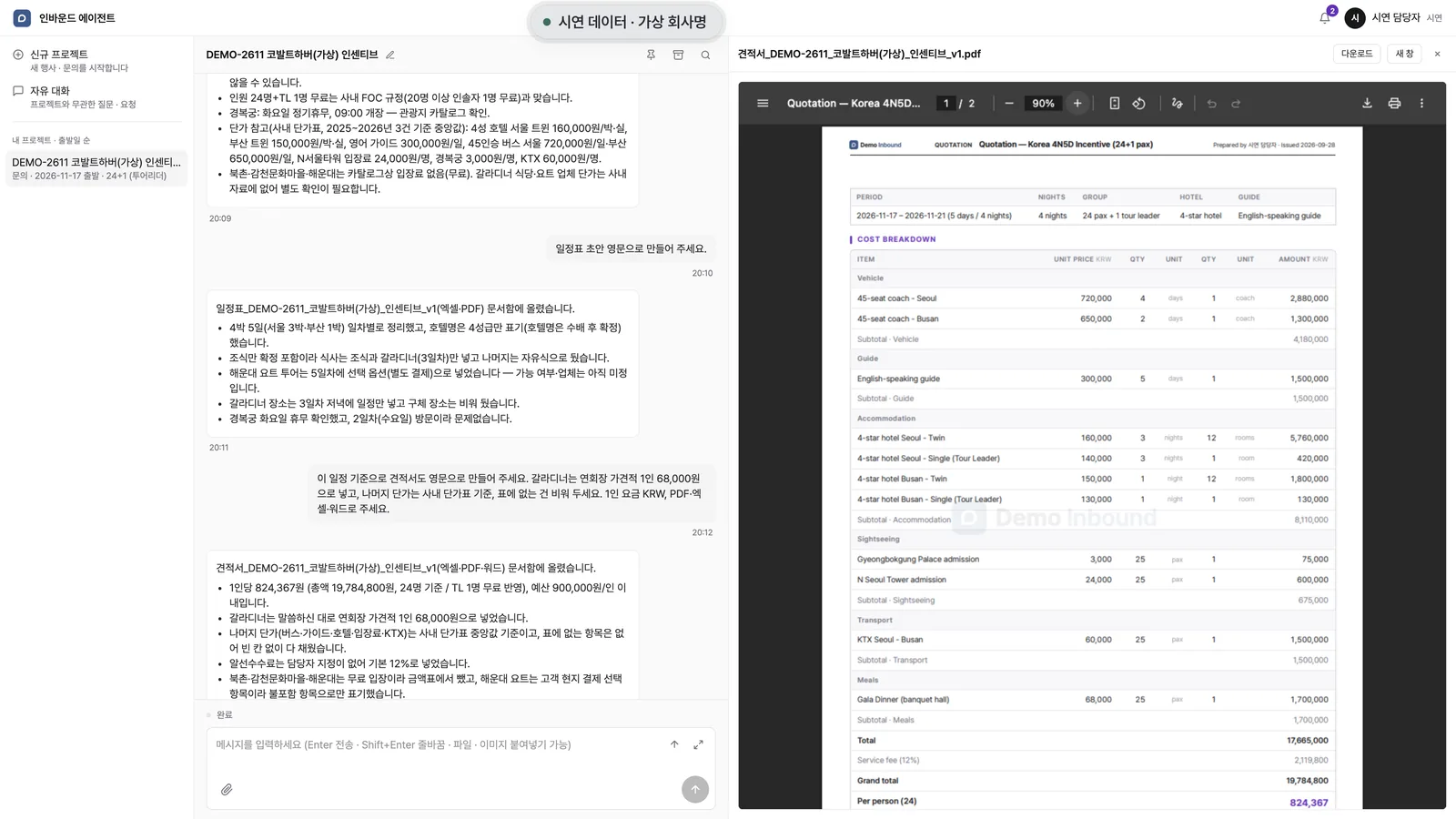
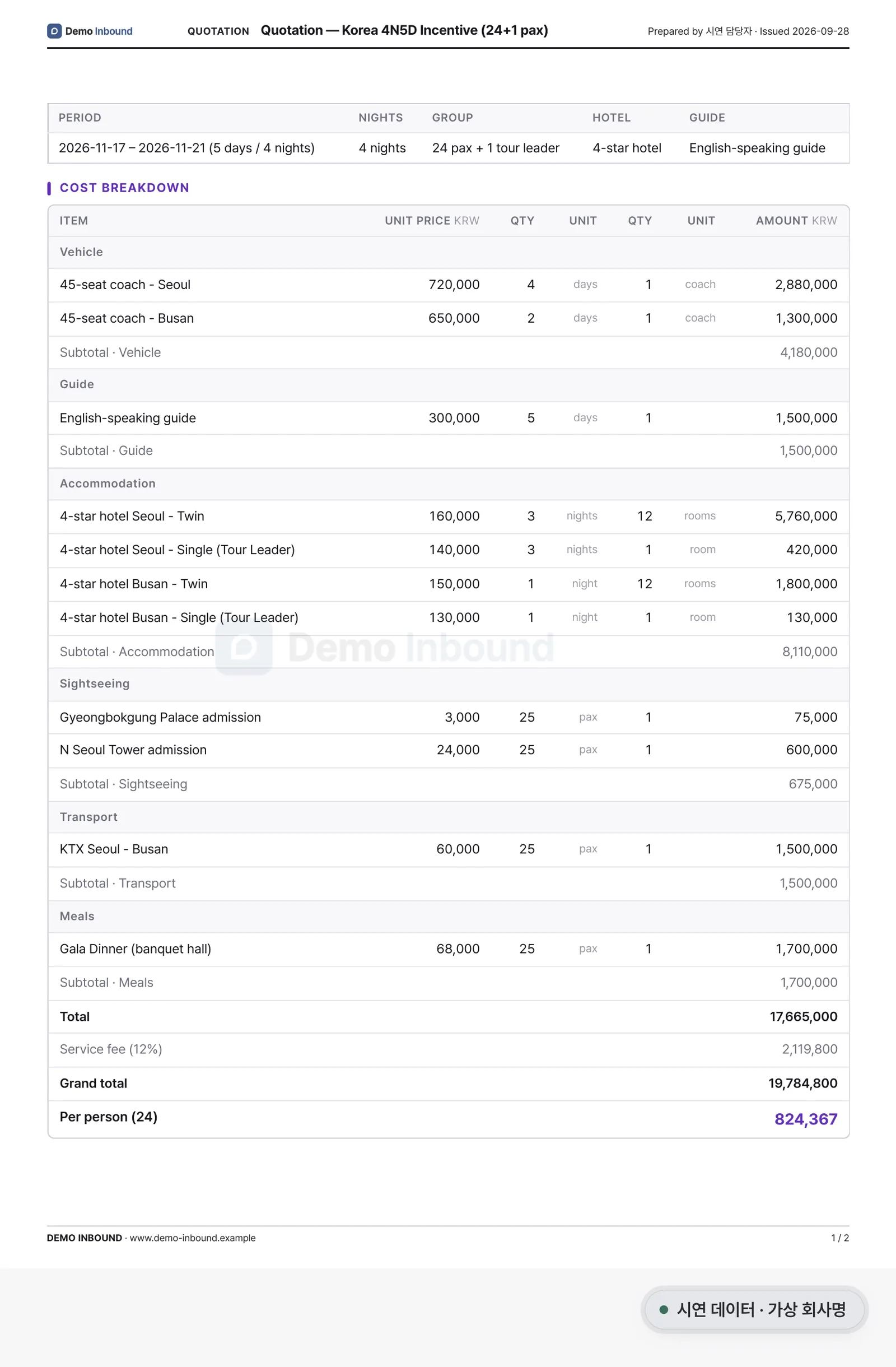
The workspace brings the request and reference material into the same trip record. The operator receives an itinerary or quotation draft, supporting references and the items that still need confirmation. Prices, availability, travel choices and the final reply remain with the team.
How the workflow connects
Request and conditions
Organize the partner email and separate confirmed details from open questions.
Company references
Find relevant past trips and apply the team's approved rates and document rules.
Draft and review
Prepare editable documents and keep revisions within the same trip record.
The workspace and its output
Questions before applying this workflow
What would our team receive?
The initial scope is one team's workflow and one existing document format. Outputs can include a condition summary, items to confirm, relevant references and an editable itinerary or quotation draft. We agree on the actual output before building.
Do we need to replace our booking or accounting system?
We first review the tools you already use and the preparation work that remains between them. Any system connection is scoped separately; a replacement is not the starting assumption.
What does the operator still decide?
The team confirms rates, availability, itinerary choices and exceptions, reviews the draft and controls what is sent to the customer.
How would we assess the improvement?
We compare representative requests, including the time staff spend checking and correcting the output. We also examine missing conditions and errors. The decision to expand follows that review.